For years, pet food manufacturers controlled the industry's growth agenda. They built brands, developed products, invested in innovation and fought for market share. Retailers played a supporting role: providing shelf space and access to consumers.
That balance of power is beginning to change.
According to the latest Pet Food in Mexico 2026 report by Triplethree International, one of the most significant competitive shifts in the Mexican market is taking place inside retail organizations. Through private-label development, category management and direct access to shopper data, retailers are becoming increasingly influential participants in the pet food value chain.
Private label is no longer just a price strategy
For decades, private-label products occupied a predictable position in the market: affordable alternatives designed primarily to compete on price.
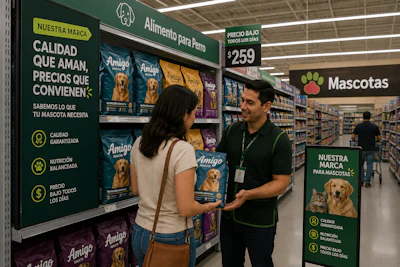
Today, many retailer portfolios extend well beyond entry-level offerings, competing on nutrition, quality, functionality and perceived value. Private labels have become strategic assets capable of strengthening customer loyalty, improving margins and differentiating retailers from their competitors.
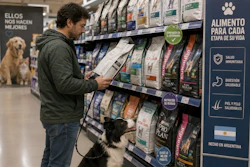
What makes this trend particularly powerful is that retailers possess advantages that traditional manufacturers cannot easily replicate. They see purchasing behavior in real time, understand shopper preferences with remarkable precision and control how products are presented, promoted and positioned at the point of sale.
Retailers are no longer selling the category. They are shaping it
The implications extend far beyond the success of any individual retailer brand.
Major players such as Walmart continue to expand their influence through scale, category leadership and proprietary brand portfolios. Costco has demonstrated the power of a membership-based value proposition, while regional operators such as H-E-B and Chedraui continue strengthening their position in a category that is becoming increasingly important to household spending.
Manufacturers are no longer competing solely against other brands. Increasingly, they are competing against organizations that control consumer access, category visibility and the economics of the shelf.
At the same time, this shift creates opportunities for collaboration. Retailers still depend on manufacturing expertise, innovation and production capacity, making strategic partnerships more important than ever.
The future of Mexico's pet food industry will not be defined solely by product innovation or marketing investment. It will be defined by a more fundamental question: Who captures the value created by the category?
Increasingly, the answer may not be the company that makes the product. It may be the company that controls the point of purchase.
Iván Franco is the founder of Triplethree International and has collaborated on hundreds of research projects for several consumer goods industries.