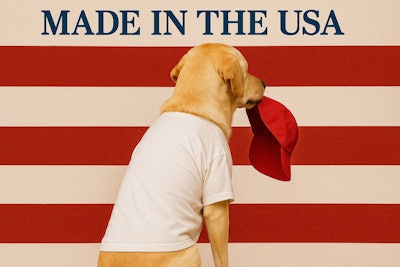
“Made in the USA” means more than marketing and sourcing in the pet food industry. It’s becoming a risk-management strategy, a response to trade policy and price volatility, and a shorthand for trust in an industry still haunted by melamine. Packaged Facts’ analysts observed that tariffs and consumer sentiment have combined to boost reshoring of the U.S. pet food supply chain.
“In the face of the Trump administration’s global trade policies, pet industry participants who haven’t already climbed aboard the Made in the USA bandwagon would do well to do so, as numerous pet marketers and retailers already have,” analysts wrote in Packaged Facts’ report “Pet Food in the U.S., 19th Edition (November 2025).”
At the same time, the report points out that pet food inflation, which had briefly fallen, has begun to edge upward again as tariffs push ingredients and finished-product prices higher in late 2025. That combination of policy pressure on imports and renewed upward price pressure could change the economics for multinational and mid-sized brands alike. Decades of lean, globally distributed sourcing options are suddenly competing with more geographically concentrated, politically insulated supply chains. For companies that moved away from foreign inputs after 2007’s melamine contamination crisis, tariffs add another reason to stick with domestic suppliers and co-packers rather than revisit lower-cost overseas options.
Ingredient trust issues that never really went away
The melamine tragedy connects directly with current attitudes about sourcing. Following that crisis and subsequent recalls, U.S. pet food producers began deliberately reducing or eliminating imported ingredients, particularly those from China, as part of more tightly managed supply chains. Those moves were not just internal quality-control decisions; they trained consumers to look for country-of-origin cues, and they set the stage for the strength of today’s “Made in the USA” positioning.
Packaged Facts September 2025 survey of pet owners confirms just how deeply this preference has taken hold: 58% of pet owners say they actively seek out pet foods made in the United States. In an environment where inflation has forced many shoppers to trade down on price, sourcing transparency may be one of the few non-negotiables they’re still willing to pay for at the checkout.
Tariffs, freight disruptions and currency swings don’t just affect costs today; they also make forecasting more volatile. Domestic supply chains may function as a hedge against that volatility, even when short-term ingredient costs are higher. Pet food CPI dropped in 2024, but by 2025 inflation had flattened overall. Pet industry inflation jumped 40% in September, rising from 2.5% to 3.5% year-over-year. That kind of whiplash undermines long-range planning if a pet food brand relies heavily on imported ingredients or finished products. Sourcing closer to home may not always be cheaper on a per-pound basis, but it may be easier to model, especially when logistics lead times and border risk are factored in.