Spinach is at the top of the superfoods list — foods that provide natural antioxidants, bioactives, functional fiber and essential nutrients. Despite many of us growing up not liking spinach, today we find it in a wide variety of grocery products and in food service, usually served as a fresh vegetable in salads or as an addition to sandwiches in place of lettuce. Much of this thinking about the benefits of spinach in our own diets has now crossed over into pet food. We see superfood blends unapologetically promoted in product names and callouts with a nod to their benefit for our pet’s health, often with spinach as a lead. So, is it true? Does this vegetable add something to dog and cat food, treats, and toppers?
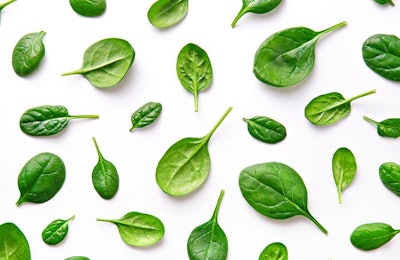
Spinach is a green leafy vegetable originating in central and western Asia. It is in the Amaranth family and related to beets and quinoa. The spinach plant is grown as an annual and harvested as leafy greens at various stages of maturity. There is a wide array of varieties, some of which are more suitable for commercial production. In the U.S., three basic types of spinach are produced: savoy (curly leaf), flat (smooth leaf) and semi-savoy (slightly curly leaves). They are all green leaved and differ primarily in their thickness or durability in handling. There are also new varieties being developed with more red coloration in the stems and leaves.