A study comparing 26 commercial cat foods found that retorted wet cat foods contained roughly three times more advanced glycation end-products (AGEs) than mildly cooked or extruded dry diets, with processing time appearing to be a key factor in AGE formation alongside temperature and formulation.
- Retorted wet cat foods contained approximately 3x more AGEs than mildly cooked or extruded dry diets in the study of 26 commercial products.
- Processing time matters more than temperature alone—retorted foods are heated for 20-120 minutes while extruded kibble reaches high temperatures for only seconds.
- AGE formation depends on multiple factors including ingredient selection, additives, overall formulation, and the food matrix, not just peak processing temperature.
- Higher dietary AGE exposure has been linked to inflammation and chronic diseases in human and rodent studies, though health effects in cats remain understudied.
- All tested products met nutritional requirements for cats, but the study establishes baseline data for future research on processing effects and potential health benefits of reducing AGE exposure.
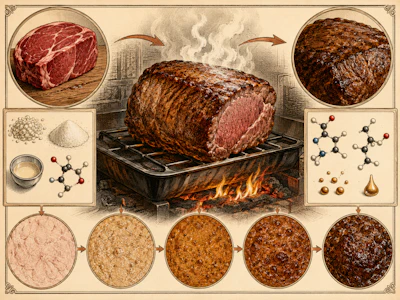
There may be a darker side to cooking than the toasted color it gives to food. Advanced glycation end-products (AGEs) form naturally when proteins or amino acids react with sugars during heating, part of a series of chemical reactions known as the Maillard reaction. The same chemical reactions that create browned bread, roasted coffee and grilled meat also produce AGEs.
AGEs aren’t the Maillard reaction products most known for adding delicious flavors and tantalizing smells to grilled meat and baked goods. AGEs themselves are generally viewed as markers of heat-induced processing rather than flavor compounds.
Researchers are increasingly studying AGEs because higher dietary exposure has been associated with inflammation and several chronic diseases in human and rodent studies.
For companion animals, the health implications of dietary AGEs remain little studied. In pet food manufacturing, AGEs can form during thermal processing methods such as extrusion, retorting and cooking. Research published in the Journal of Animal Science aimed to shed light on browning in pet foods.
Retorted wet cat foods show highest advanced glycation end-product levels
Retorted wet cat foods contained substantially higher levels of advanced glycation end-products (AGEs) than either mildly cooked or extruded dry diets in a study that offered one of the most detailed looks yet at how commercial pet food processing influences these compounds.
The research analyzed 26 commercially available cat foods from the United States and United Kingdom, comparing six mildly cooked diets, 10 retorted wet diets and 10 extruded dry diets. Researchers measured four Maillard reaction products, including three AGEs that have attracted increasing scientific attention because of potential associations with inflammation and chronic diseases.
Retorted wet diets contained roughly three times more total AGEs than either mildly cooked or extruded dry diets. Estimated daily AGE intake for a typical adult cat followed the same pattern, with retorted diets resulting in the greatest dietary exposure.
The findings were not entirely what the researchers expected.
Before conducting the study, the team hypothesized that mildly cooked diets would contain lower AGE concentrations than both conventional wet and dry foods because they are processed at lower temperatures. Instead, mildly cooked and extruded dry diets often did not differ significantly.
"Retorted wet diets consistently contained the highest AGE concentrations, while mildly cooked (fresh) and extruded dry diets were generally similar, despite being manufactured very differently," researcher Devon Tate said. "This suggests that AGE formation is influenced by more than just peak processing temperature."
Tate said processing time appears to be a key factor. Extruded kibble reaches high temperatures but only for seconds during extrusion. Retorted foods, by comparison, undergo sterilization at elevated temperatures for much longer periods, typically 20 to 120 minutes.
"Taken together, our findings suggest that AGE formation reflects the combined effects of processing conditions, formulation, and the food matrix, rather than temperature alone," Tate said.
AGE is more than a number for formulators
That conclusion carries practical implications for formulators. The researchers found only limited relationships between nutrient composition and AGE concentrations within each product category, suggesting that no single ingredient or nutrient predicts AGE formation. Instead, Tate said the interaction among processing conditions, ingredient selection, additives and overall formulation appears to determine how many AGEs develop during manufacturing.
"We don't know the complete processing history of every ingredient, the precise manufacturing conditions used, or the contribution of ingredients such as palatability enhancers, all of which may influence AGE concentrations," Tate said. "Overall, our findings reinforce that no single nutrient, or even a single processing parameter, is sufficient to predict AGE formation."
The study also evaluated lysine, an essential amino acid that can become less nutritionally available as foods are heated. Extruded dry diets contained the lowest total and reactive lysine concentrations, although the proportion of reactive to total lysine was similar across all three diet formats. All products exceeded established nutritional requirements for cats. The researchers said this finding highlights the importance of evaluating both the absolute amount of available lysine and the ratio when assessing ingredient quality and processing effects.
While the results demonstrate clear differences among processing formats, the authors caution against drawing conclusions about feline health. The study measured AGE concentrations in commercial diets, not biological effects in cats.
Instead, the work establishes baseline data that could guide future research into how processing, formulation and ingredient choices influence AGE formation and whether reducing dietary exposure offers measurable benefits for companion animals. Tim Wall | DALL-E