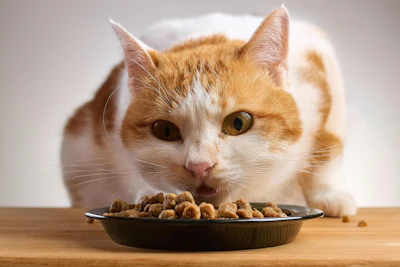
Pet food manufacturers' prices for canned and wet cat food rose 6.4% from May 2024 to May 2026, nearly four times the 1.7% increase in canned and wet dog food over the same period, according to John Gibbons, president of Pet Business Professor, who tracks monthly U.S. Bureau of Labor Statistics data for the pet industry.
In his latest report, Gibbons noted the dry cat food Producer Price Index, or PPI, rose 2.3% since May 2024, almost double the 1.2% increase for dry dog food. As a result, total cat food PPI increased 3.2% over the period, 2.5 times the 1.3% increase in total dog food PPI. Gibbons noted the gap is significantly wider than the historical average; from 2011 to 2025, the total cat food PPI increase exceeded the total dog food PPI increase by only 14%.
Almost all of the recent canned food increases occurred between December 2025 and January 2026, Gibbons said. Canned cat food PPI rose 5.9% that month, the largest single increase on the chart, followed by a 1.6% rise in canned dog food PPI. Looking at the food-type breakdown overall, Gibbons wrote, "No real surprises, just reinforced expectations."
Retail prices remain near record highs
The Consumer Price Index, or CPI, for pet food at retail has risen just 1.4% over the past 24 months, a sharp slowdown from the 21.9% price increase recorded from 2021 to 2023, according to Gibbons' analysis.
Retail pet food prices spiked in 2022 and 2023, flattened in 2024 and slipped slightly in 2025 before rising again from December 2025 through March 2026, when they reached a record high. Prices eased slightly in April and May 2026 but remained within 0.6% of that peak. "We can't forget that inflation is cumulative," Gibbons wrote.
Gibbons said the 1.1% rise in the total dog and cat food PPI in 2026 matches the 1.1% increase in the pet food CPI over the same period.
"This is a good sign," he said, noting it suggests retailers have already passed recent manufacturer price increases on to consumers. He said both retail and manufacturer prices are likely to remain elevated but relatively stable in the near term, barring an unexpected disruption such as a new supply chain issue.
"This could all change quickly due to an unexpected event, like a sudden new supply chain problem," Gibbons said.
Canned and raw segments continue to lead
Canned, wet and raw dog and cat food posted the two highest inflation rates among all food types and led the pricing surge in 2022 and 2023, according to the data. Canned dog food PPI inflation is 88% higher than dry dog food inflation, Gibbons found. All cumulative food-type inflation rates since 2021 have more than doubled, though the CPI increase over the same period is 4.5 times higher.
Gibbons also pointed to a divergence in the "Other Pets" category, which includes non-dog, non-cat pet food. From 2023 to 2025, the PPI for that category fell 11.3%, while the dog and cat food PPI continued modest growth of 2.4%, breaking from a historical pattern in which the two closely tracked each other from 1997 to 2007.
Gibbons noted that the dry dog food PPI, using a 2019 base year, closely mirrors the retail CPI pattern from 2024 to 2026 more than any other food type. He attributed this to dry dog food's position as the largest dollar segment in pet food and the category's relative affordability and ease of price comparison, both in stores and online.
"Maybe pet parents who buy dry dog food are helping to slow petflation," he wrote.
Data sourced from the latest Petflation report by John Gibbons at PetBusinessProfessor.com, tracking Consumer Price Index data for pet industry segments compared to national inflation trends.