ADM's exit exposed a contradiction the industry rarely discusses openly.
For years, Brazil has been presented as one of the great growth stories in global pet food. It is the second-largest pet food market in the world after the United States, with a massive pet population, strong premiumization trends and one of the industry's most sophisticated manufacturing bases.
From the outside, it looks almost impossible to fail there. And yet, ADM exited the market.
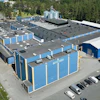
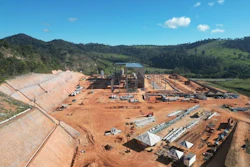
In 2025, the company shut down its pet food operation in Três Corações, Minas Gerais, after reportedly spending months trying to sell the asset without success. The facility was not marginal. Based on Triplethree International estimates, the facility likely operated at industrial volumes exceeding 20,000 tons per month, positioning ADM among Brazil's relevant pet food manufacturers, although not within the country's largest industrial tier.
The company managed brands including Equilíbrio, Naturalis, Max, Nero, Doglicious and Catlicious.
Growth does not always translate into profitability
ADM's departure creates an uncomfortable question for the industry. If Brazil is such an obvious opportunity, why would one of the largest agribusiness corporations in the world decide to leave? ADM's decision may not necessarily indicate operational failure. It may instead reflect the growing difficulty of achieving multinational-level return expectations within increasingly competitive and operationally complex markets such as Brazil.
The answer may be that Brazil is not a bad market. It may simply be one of the hardest pet food markets in the world to monetize efficiently.
Competing seriously in Brazil requires industrial scale, logistics efficiency, local sourcing advantages, tax optimization and highly aggressive commercial execution. At the same time, companies face high effective taxation, regulatory complexity, labor costs and relentless pricing pressure from highly adapted domestic competitors.
This creates a dangerous paradox: A market can grow rapidly while margins simultaneously deteriorate.
What happened after ADM left may be even more revealing
Perhaps the most surprising part of the story was not the closure itself, but how quickly the market absorbed ADM's disappearance.
There was no major supply disruption or structural shortage. Retailers replaced shelf space quickly, distributors migrated portfolios and local manufacturers absorbed the available volume with surprising speed.
That says something extremely important about Brazil.
ADM was relevant. But the Brazilian market was much larger than ADM.
Brazil remains one of the most attractive pet food markets in the world. But ADM's exit suggests it may also be one of the most operationally unforgiving.
Iván Franco is the founder of Triplethree International and has collaborated on hundreds of research projects for several consumer goods industries.