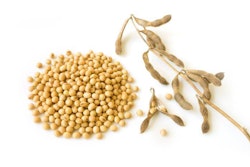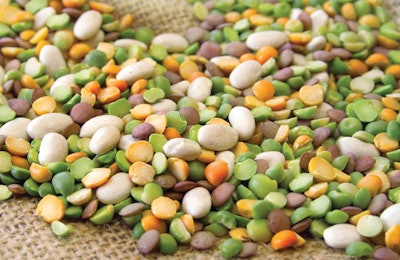
A few years ago, peas and pulses and other legume seeds were featured as alternative carbohydrates in pet foods. These have become quite popular in the world of grain-free options. However, there is a conspicuous gap in the use of the legume seeds from the Phaseolus family, the so-called common beans (Phaseolus vulgaris L.). These include white beans, navy beans, pinto beans, kidney beans, black beans and a host of others. Why are they absent from pet foods? It could be consumer bias, perhaps a cost consideration or simply a lack of understanding about whether beans are a good option in modern pet foods.
These beans contain around 21–24 percent protein, 0.8–1.5 percent fat, 3.3–4.2 percent ash, 15–25 percent TDF (total dietary fiber) and the balance as starch. They are a good source of potassium and folate, but contain only small amounts of essential fatty acids — some of which include linolenic acid (omega-3). As for their protein content, they are usually sufficient in most amino acids except for methionine, which is first limiting. There is also interest in these beans for their levels of phytoestrogens (daidzein and genistein) and some poly-phenolic compounds.