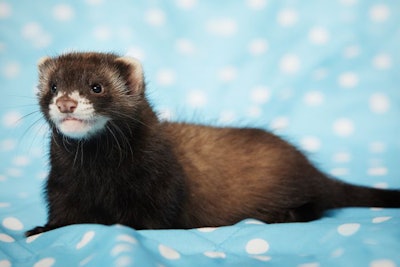
Pea protein in ferret food may be contributing to a surge in a medical condition among ferrets, and the problem may go beyond pet food formulations meant for the small predators. During the past decade, one veterinarian has observed a rise in the prevalence of cystine urolithiasis, a type of bladder stone, in ferrets that parallels the appearance of pea protein in diets both ferret and cat.
“My concern on this topic arises from the alarming number of stones that I am seeing in ferrets and the number of surgeries that I am having to perform ever since peas started being added to the diets of ferrets, and then also to cat foods that a lot of ferrets are offered by their owners,” Cheryl Greenacre, professor in the University of Tennessee College of Veterinary Medicine, said during her presentation during the United States Food and Drug Administration’s FDA Virtual Listening Session on the Oversight of Pet Food.
Her colleagues at the University of Tennessee noted that nearly all the cases of bladder stones in ferrets have been in animals that ate a diet with pea protein. One case involved a ferret fed a diet with lentil protein.
Pea protein in ferret food may be contributing to a surge in a medical condition among ferrets, and the problem may go beyond pet food formulations meant for the small predators. During the past decade, one veterinarian has observed a rise in the prevalence of cystine urolithiasis, a type of bladder stone, in ferrets that parallels the appearance of pea protein in diets both ferret and cat.
“My concern on this topic arises from the alarming number of stones that I am seeing in ferrets and the number of surgeries that I am having to perform ever since peas started being added to the diets of ferrets, and then also to cat foods that a lot of ferrets are offered by their owners,” Cheryl Greenacre, professor in the University of Tennessee College of Veterinary Medicine, said during her presentation during the United States Food and Drug Administration’s FDA Virtual Listening Session on the Oversight of Pet Food.
Bladder stones in ferrets related to diet
Her colleagues at the University of Tennessee noted that nearly all the cases of bladder stones in ferrets have been in animals that ate a diet with pea protein. One case involved a ferret fed a diet with lentil protein.
She referenced a paper by veterinarians in Minnesota which noted that from 2010 to 2017, in 700 cases 89% of bladder stone were cystine, as opposed to only 6.5% struvite bladder stones, which formerly had been the most common. Struvite stones are made up of magnesium, ammonium and phosphate, while cystine stones form from the amino acid cysteine.
“Therefore, I think that a pea or lentil protein should not be allowed in ferret diets,” she said. “There are a lot of owners out there that feel if they feed a high-quality, grain-free feline or cat diet to my ferret that's better than some of the ferret diets out here. Those are probably the majority of the cases that we're seeing. The ferrets aren't even on a ferret food. So, feline diets with pea or lentil protein should include a warning not to feed it to ferrets.”
Ferrets are even more exclusively carnivorous than cats, she said, with higher animal protein and fat needs. Although the exact mechanism hasn’t been determined, the correlation among pea protein diets and ferret bladder stones strongly suggests an actual connection.
In the results of controlled experiment, published in the Journal of Veterinary Medicine and Surgery, ferrets fed a grain-free diet were 57.9 times more likely to develop cystine bladder stones than animals in a reference population.
Cat food makers may be able to help ferret owners by labeling their product as not for ferrets, if it contains pea protein.