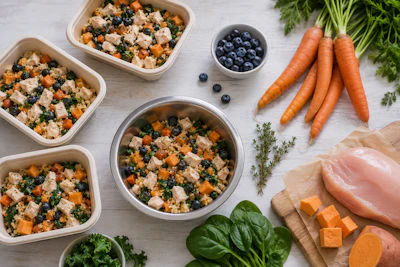
Premium fresh and frozen dog food is growing far faster than the broader dog food category despite consumer price sensitivity, according to a new report from Cascadia Pet Industry Insights.
Fresh and frozen dog food posted a 24.5% compound annual growth rate from 2021 through 2025, compared with a 5.7% CAGR for the overall dog food and treats category, the report found.
Fresh, frozen segment gains share from wet food
The dog food and treats category breaks down into four segments, according to the report: fresh and frozen food, which makes up about 11% of food sales and 8% of category sales at $1.2 billion; shelf-stable wet food, at about 22% of food sales and 15% of category sales, worth $2.4 billion; treats, which account for 31% of category sales at $4.9 billion in 2025; and shelf-stable dry food, or kibble, comprising about 67% of food sales and 46% of category sales at $7.1 billion.
Fresh and frozen's share gains have come largely at the expense of shelf-stable wet food, which the report said has consistently lost share.
Structural drivers behind category growth
Cascadia attributed the segment's growth to factors also driving premiumization across other pet consumables categories, including the humanization of pets, innovation from an expanding roster of brands, and growing consumer education about the health benefits of less-processed food forms.
The report also pointed to low household penetration as a growth opportunity: Only 10% of households purchased fresh dog food in 2025, compared with 61% that purchased any type of dog food during the same period.
Premium pricing has not curbed demand
Fresh and frozen dog food can cost pet parents more than double the per-pound price of dry food, but that premium has not slowed demand even as broader economic pressure has tightened household budgets, according to the report.
About 96% of consumers surveyed said they expect to maintain or increase their spending on fresh pet food in the near future. The report attributed that resilience in part to a higher-income customer base and the high switching costs associated with changing a dog's main meal.
Investment continues to flow into category
Financial and strategic investors have continued to back fresh and frozen pet food brands, the report noted. Examples cited include The Farmer's Dog, backed by Insight Partners, Forerunner Ventures and others; Open Farm, backed by General Atlantic; JustFoodForDogs, backed by L Catterton; and Maev, backed by VMG Partners.
The report also cited Ollie's acquisition by Agrolimen in February 2026, Mars' acquisition of NomNom in 2022, and Freshpet, which has been publicly traded since 2014.