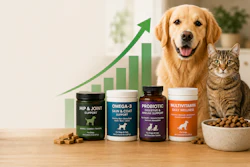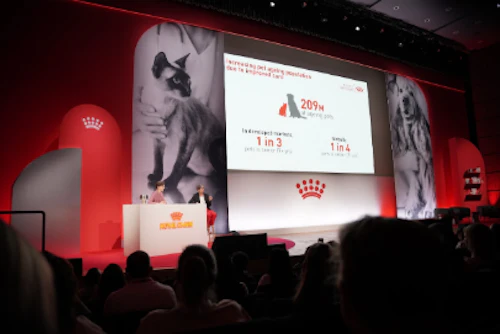
The pet supplements category remains one of the most closely watched segments within pet consumables, drawing sustained interest from institutional investors and strategic acquirers, according to Cascadia Pet Industry Insights' Summer 2026 report.
Cascadia attributed category interest to several factors, including continued humanization of pets, expanded consumer education and a growing emphasis on everyday wellness routines intended to support pets' vitality and quality of life, not simply longevity. The report also cited rising pet life expectancy, noting that dog life expectancy has doubled over the past four decades and that house cats now live roughly twice as long as their wild counterparts.
Cascadia said the category remains in an early stage of adoption, with a penetration rate of 15% to 20%, compared with about 75% of U.S. adults who take human supplements. The report described the segment as complementary to, and incremental with, core pet food and treat categories.
Dogs dominate but cat will grow
Within pet supplements, Cascadia said the primary focus has been the dog supplement market, valued at more than $3 billion, given the size of the dog population relative to cats. The report said supplements remain relatively subscale compared with food and treats, though it anticipates growth in cat supplements as the category matures and consumer adoption increases.
The report said supplements have a distinct channel mix compared with the broader pet category, with more than 70% of sales occurring online, a share Cascadia projects will rise to about 73% by 2028. Joint health, skin and coat health, and digestive health were cited as the primary need states driving purchases, with chews and powders as the dominant form factors.
Retailers make room for supplements
Cascadia said that while more than 70% of pet supplement sales occur online, both online and brick-and-mortar retailers are expanding their focus on the category, citing its high-growth and high-margin characteristics. The report noted that Chewy and Petco have specifically addressed the supplements category on recent earnings calls, which Cascadia said reflects retailer commitment to supporting continued category growth.
Category M&A activity expected to accelerate
The report said the pet supplements category has seen significant merger and investment activity in recent years, spanning private equity platform investments, which Cascadia said have made up the majority of category deals, along with large-cap strategic investments and tuck-in acquisitions.
Cascadia listed several notable private equity transactions:
- Amberstone's investment in BetterWild in 2026
- Morgan Stanley's acquisition of FoodScience in 2024
- BC Partners' acquisition of Pet Lab Co. in 2025
- Gryphon's acquisition of Vetnique Labs in 2023, followed by Vetnique's tuck-in acquisition of YuMove in 2024
- CAVU's investments in Native Pet in 2022, 2023 and 2024
- Vestar's acquisition of Pet Honesty in 2021
Strategic acquirers engaged, but cautious
Strategic acquirers continue to evaluate the category and participate in M&A processes, though Cascadia said strategic-led deal activity has been limited since H&H Group's acquisition of ZestyPaws in 2021.
The report attributed the slowdown to several factors, including that most pet supplement companies remain subscale for large strategic acquirers and that many strategics are prioritizing scientific backing and clinical trials to support clinically backed claims that may not yet exist for emerging brands.
Cascadia said several companies are holding out 12 to 24 months or longer to reach specific milestones before pursuing a liquidity event. The report also noted that General Mills' venture arm, 301 Inc, made an early-stage investment in Fera, which Cascadia characterized as a "test and learn" move by the company.