The pet industry may be approaching an inflection point in oral care innovation. Two back-to-back Tech Talk sessions at Petfood Forum 2026 in Kansas City presented clinical evidence for distinct but complementary approaches — one combining enzymes and probiotics, the other a targeted oral probiotic strain — each aimed at supporting oral health in dogs.
The scope of the problem
 Dr. Abhijit Rathi, director of R&D, pet and human nutrition at Specialty Enzymes & Probiotics.Lisa Cleaver
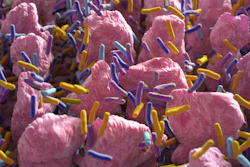
"One single bacteria with the perfect nutrient can form a colony," Rathi said. "That colony, once it starts growing, will form a network — also known as biofilm. That network is of carbohydrates and protein, and it is very sticky, very difficult to get rid of."
Marie Parks, ingredient science specialist at Stratum Nutrition, noted similar statistics: 80 to 90% of dogs and cats have dental and gum health issues by age 3, while only 2% of dog owners brush their dog's teeth daily and more than 50% have never brushed their dog's teeth at all.
Bactase Pet PB: enzyme-probiotic formulation
During his Tech Talk, Rathi presented research on Bactase Pet PB, a formulation combining enzymes and probiotics designed to address multiple aspects of oral health. In vitro testing at a 0.63% concentration showed inhibition of caries-forming bacteria, and a single-use application produced a 36% decrease in biofilm formation.
The research team then moved to a 30-day randomized, double-blind clinical trial conducted in a real-world veterinary setting. "Unlike the common studies in this industry, where the studies are carried out on a caged animal in a specified laboratory setting and a clinician delivering the dosage, we did the studies on real-life dogs with real-life pet parents," he said, noting that pet owners themselves administered the product.
Dogs with elevated gingivitis scores were enrolled and evaluated at day one and day 30. Results showed significant reductions in plaque score, gingivitis score and malodor. Rathi noted one pet parent reported noticeable improvement in bad breath as early as day seven.
A second clinical trial examined whether Bactase Pet PB could help maintain the results of a professional dental cleaning. Dogs underwent deep dental cleanings on day one, then followed a commercial diet. By day 13, the control group showed significant increases in gingivitis score, plaque score and malodor. The group receiving Bactase Pet PB showed no buildup of gingivitis or plaque and a negligible increase in bad breath through day 30, with no calculus deposition or increase in plaque thickness.
"After professional dental cleanup, Bactase Pet PB not only proved to be more beneficial, but it also made sure your professional dental cleanup stays for longer," Rathi said.
OraCMU: microbiome-targeted oral probiotic
 Marie Parks, ingredient science specialist at Stratum Nutrition.Lisa Cleaver
The strain was selected for its ability to produce hydrogen peroxide and for four specific mechanisms of action: breaking down bacterial biofilms, producing bacteriocin-like compounds that selectively target harmful bacteria, directly reducing volatile sulfur compound (VSC) production, and colonizing the oral cavity to crowd out undesirable bacteria.
Parks drew a distinction between OraCMU's approach and conventional oral interventions. "With current approaches to halitosis like antibacterials and dental treatments, it's more so a broad 'kill everything' approach," she said. "It's essentially like taking a flamethrower to a flower garden just to kill the weeds, when in reality what we really need is a precision approach."
Two canine studies were reviewed. The first, a six-week placebo-controlled trial in 18 healthy beagles, tested three OraCMU doses: 20 million, 200 million and 2 billion colony-forming units. As early as week two, the low-dose group showed significantly improved breath scores versus placebo. By week six, all dose groups showed improvement. Total VSC levels in the OraCMU groups were at or below the established discomfort threshold of 1.5 nanograms per 10 milliliters by week six; the placebo group measured nearly double that level.
The second study followed a similar design but began with a professional dental scaling to establish a clean baseline. Results took slightly longer to reach significance given the lower starting point, but both the low- and high-dose groups showed significantly lower plaque levels than placebo from weeks four through six. Critically, the placebo group's plaque continued to accumulate throughout the study while the OraCMU groups remained near baseline values — suggesting the ingredient may help extend time between professional dental cleanings.
Microbiome analysis at week six confirmed colonization of the W. cibaria strain and significantly lower levels of the periodontal pathogens Fusobacterium nucleatum and Porphyromonas gulae in both OraCMU groups.
Parks noted OraCMU is designed primarily for supplement applications and performs best when exposure time in the oral cavity is maximized — either as a powder on top of food or mixed into water immediately before consumption. A 20 million CFU dose is the target, with a 2 billion CFU input at time of manufacture recommended to account for stability loss over shelf life.
Market context
Rathi framed the opportunity within a pet oral care market currently valued at approximately $900 million and projected to reach $1.5 billion, growing at a compound annual growth rate of 5.7%. Parks added that 94% of pet owners are aware that oral health affects overall pet health, but compliance with brushing remains low, driving demand for practical alternatives.