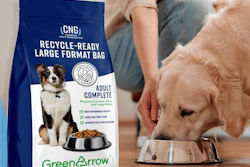
Extended producer responsibility (EPR) is rapidly reshaping packaging decisions across the pet food industry, but speakers at the Pet Summit during Global Pet Expo emphasized that companies should view the policy framework as more than a compliance obligation. Instead, they described EPR as a market signal that rewards recyclability, exposes data gaps and accelerates collaboration across the value chain.
EPR policies place financial responsibility for end-of-life packaging management on producers, typically through material-specific fees. Those fees vary widely depending on recyclability, creating a clear economic incentive to redesign packaging portfolios.
Christine Yeager, founder of CSY Impact Consulting, said companies often misinterpret EPR as a tax rather than a strategic tool.
“Fees favor recyclable materials,” Yeager said during the panel. “You can either take that as a penalty, or you can use that data to understand where your risks are and shift your portfolio.”
Early fee structures illustrate the disparity. Recyclable materials may incur fees as low as a few cents per pound, while nonrecyclable formats can exceed $1 per pound. This differential is already pushing brands to reconsider material choices, particularly in high-volume categories like flexible packaging.
Multilayer plastics under pressure
Amber Roman of Ahlstrom,a manufacturer of fiber-based products, highlighted multilayer plastics as one of the formats most exposed to the effects of EPR.
“Any multilayer plastic is going to be your most expensive solution,” Roman said, citing recycling challenges even in emerging chemical recycling systems.
In contrast, fiber-based and mono-material solutions are gaining traction due to lower fees and improved recyclability pathways. However, Roman cautioned that no “perfect” solution exists yet. Packaging transitions often require trade-offs in performance, cost or operational compatibility, particularly when shifting from heat-seal plastics to alternative materials.
Bioplastics, mono-polyethylene structures and post-consumer recycled content are also being explored, though each comes with technical and regulatory uncertainties.
Data gaps complicate compliance
While material choices are critical, panelists repeatedly emphasized that data management remains one of the biggest challenges in EPR implementation.
Lowell Huffman of rePurpose Global said companies must move from siloed data systems to a “360-degree view” of packaging information.
“The biggest challenge is connecting internal data with supplier data,” Huffman said.
Incomplete or inaccurate data can lead to significant financial miscalculations. Huffman noted that errors in material categorization or volume reporting can result in “hundreds of thousands of dollars” in over- or underpayment.
Smaller companies face additional hurdles, particularly those just above regulatory thresholds without sophisticated tracking systems, he said.
Collaboration and iteration required
Panelists agreed that collaboration across the supply chain is essential to meeting EPR requirements and advancing packaging innovation. However, progress will be incremental.
“Innovation is still happening,” Roman said. “You have to take the time to test and retest.”
Effective collaboration requires earlier engagement between brands, material suppliers, converters and equipment manufacturers. Sharing performance targets and testing data, even partially, can accelerate development cycles.
At the same time, Yeager emphasized that companies do not always need breakthrough innovation. In many cases, scaling existing recyclable solutions can deliver faster compliance and cost benefits.
Infrastructure investment and long-term outlook
Unlike traditional recycling systems funded by municipalities, EPR programs channel fees through producer responsibility organizations such as the Circular Action Alliance. These funds are reinvested into recycling infrastructure, collection systems and consumer education.
This structure is designed to improve system-wide recyclability over time, which could eventually lower fees as materials gain market value.
However, panelists cautioned that early-stage programs will involve volatility, including fee fluctuations and evolving regulations. Producers are encouraged to actively engage with program administrators and provide feedback to help refine fee structures.
From burden to opportunity
Despite ongoing challenges, speakers urged pet food companies to adopt a proactive mindset.
Key recommendations included:
- Conducting portfolio-level assessments to identify high-risk materials
- Building robust data systems that integrate supplier inputs
- Communicating packaging changes clearly to consumers
- Participating in industry collaborations and pilot programs
“Progress over perfection,” Yeager said, noting that waiting for ideal solutions may delay compliance and increase risk.
As EPR expands across U.S. states, the framework is expected to play a central role in shaping packaging strategies. For pet food manufacturers, the shift represents not only a regulatory requirement but also an opportunity to align sustainability, cost management and innovation.