As humans have normalized dealing with their own anxiety using supplements and other consumables, pet owners extend that demand to pet foods, treats and supplements. Likewise, prebiotics, postbiotics and probiotics remain popular in pet foods. Putting those two trends together, Erik Eckhardt, Ph.D., principal scientist for dsm-firmenich, discussed how postbiotics may support canine stress management through the gut-brain axis, during his presentation at Petfood Forum 2026.
The research centered on postbiotics, a category of ingredients gaining attention for their stability and functional benefits. The ingredient studied, LB Fermentate HF, is a heat-treated co-fermentate of Limosilactobacillus fermentum and Lactobacillus delbrueckii. Because the microorganisms in a postbiotic are not alive, the ingredient is more stable under processing conditions such as extrusion and retort than a probiotic.
Gut-brain axis provides biological rationale
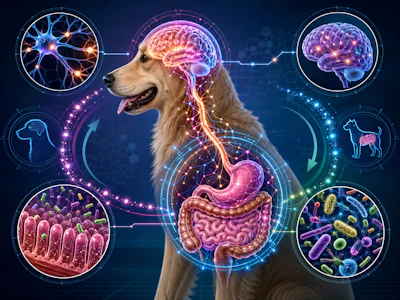
The gut-brain axis links intestinal health to neurological responses. Eckhardt emphasized this connection, stating, “it is a direct line, literally, between intestine and the brain.”
The presentation explained that disruption of the gut barrier can lead to inflammatory signaling and stress responses, while strengthening the barrier may help reduce these effects.
Preclinical data across cell, organoid and animal models suggest the postbiotic supports gut barrier integrity and microbiome balance, providing a foundation for evaluating stress-related outcomes in dogs.
Dog study shows measurable physiological effects
A randomized, blinded, placebo-controlled study in 24 adult Beagles evaluated the ingredient’s impact during a simulated thunderstorm challenge.
Eckhardt reported a significant reduction in heart rate reactivity among supplemented dogs. Cortisol responses trended lower but did not reach statistical significance, and behavioral scores did not differ between treatment and control groups.
In addition to stress markers, the study identified gastrointestinal benefits. Dogs receiving the postbiotic showed improved fecal scores during a diet transition and greater microbiome stability compared to controls.
“We saw less of a drop in post-stress amino acids and also DHA and tryptophan,” indicating reduced metabolic demand during stress, Eckhardt said.
The findings suggest postbiotics may support calming indirectly through gut health modulation rather than direct behavioral changes.